 Cartilage
 Knees
Knees Hip
Hip Shoulder
Rebuilding Mobility After ChondroFiller Treatment
28/02/26


Knee osteoarthritis (OA) is a common and often debilitating condition that can greatly reduce a person’s mobility and overall quality of life. With more people seeking alternatives to surgery, treatments such as Arthrosamid and Platelet-Rich Plasma (PRP) therapy have become increasingly popular. This article compares these two options, highlighting their simplicity and predictability—key factors for those wanting straightforward and dependable care. We also draw on the expertise of Professor Paul Lee and the London Cartilage Clinic to help you understand which treatment might be best suited to your needs.
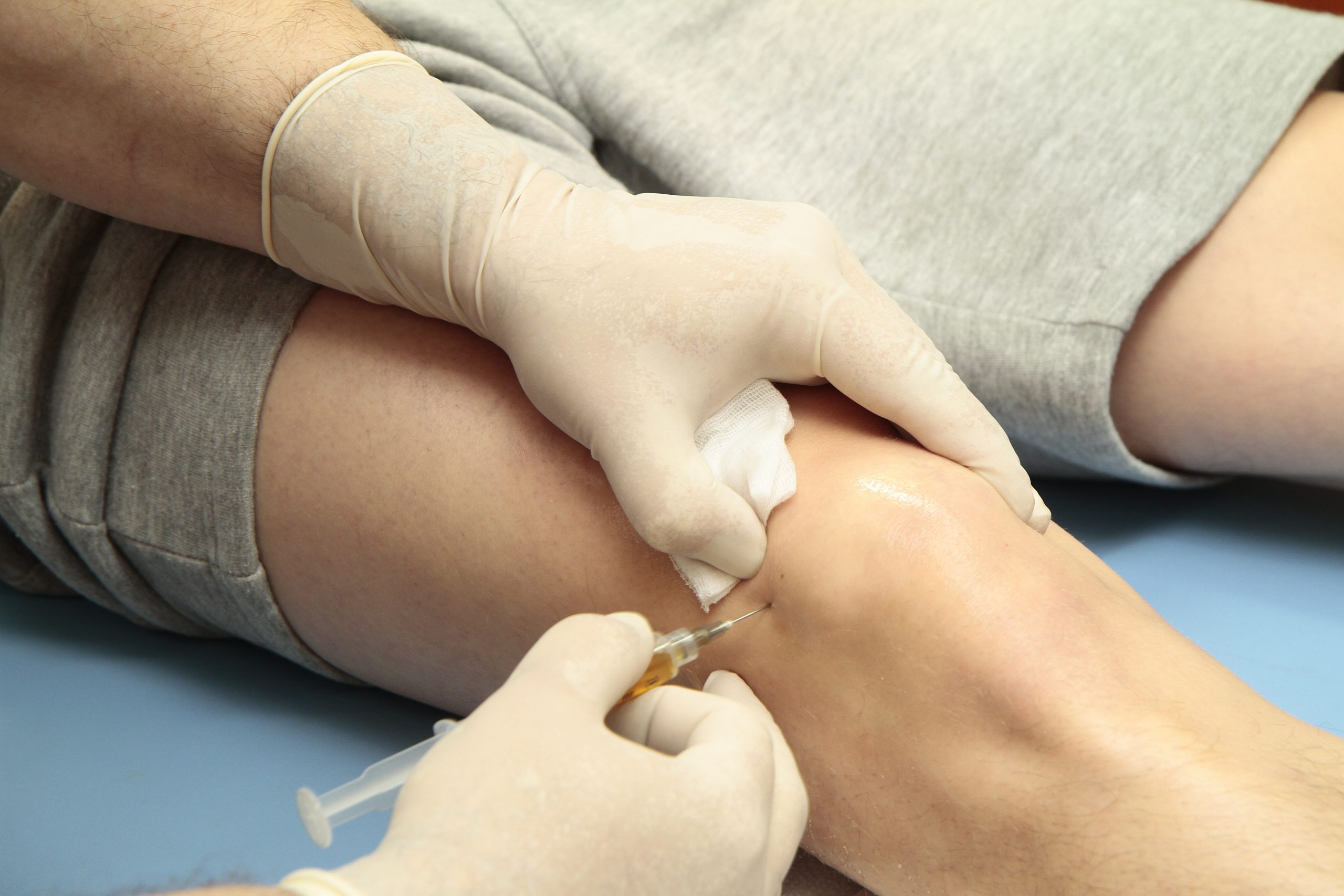
Arthrosamid is a synthetic gel injected directly into the knee to cushion the joint and ease pain. Because it is a carefully standardised product, patients tend to have a consistent experience with it. Recent research confirms that “the intra-articular polyacrylamide hydrogel (PAAG) injection branded Arthrosamid® has been known to be safe and efficacious in knee osteoarthritis (OA) patients,” reassuring both patients and clinicians.
PRP therapy, on the other hand, is quite different. It uses a sample of the patient’s own blood, which is processed to concentrate platelets—cells that encourage healing and tissue repair—before being injected back into the knee. A recent study found that “LC-PRP appears to be a safe, cost-effective means for improving pain and function in knee OA,” with positive results seen in many patients. However, the methods for preparing PRP can vary between clinics and individuals, which can affect how predictable the results are. The clinical insight of Professor Paul Lee at the London Cartilage Clinic is invaluable in helping patients navigate these differences.
In today’s busy world, the time needed for treatment is an important consideration. Arthrosamid usually requires only a single visit to the clinic for the injection, which suits those looking for a straightforward, hassle-free approach. Ongoing research is exploring which patients reap the most benefits from this convenient treatment.
PRP therapy typically involves more time: drawing blood, processing it, and then injecting it, often spread over multiple appointments. Despite this, many patients respond well to the therapy; one study noted “satisfaction was noted in 90% of patients at 6 months and 75% of patients at 12 months” following low-cost PRP injections. The London Cartilage Clinic aims to provide efficient and compassionate care to make either treatment option as smooth as possible.
Knowing what to expect from treatment is important for confidence and satisfaction. Arthrosamid’s standardised nature tends to produce more consistent and predictable outcomes. While research shows that “the literature surrounding which patients would incur the most benefit from Arthrosamid is limited,” the treatment is widely regarded as safe and effective.
PRP outcomes can be more variable due to different preparation techniques and individual biological factors. Still, good-quality PRP has shown promising results; one study observed “significant mean differences in… pain and function… at all follow-up points compared to baseline.” Professor Paul Lee emphasises the need for personalised advice to ensure patients have realistic expectations and receive care tailored to their unique situation.
When choosing a treatment, it’s important to consider cost, recovery time, ease of scheduling, and the quality of clinical support. Many patients want reliable results without complicated logistics. Notably, research into low-cost PRP highlighted that “LC-PRP was less costly ($654 vs. $1308) and yielded more quality-adjusted life years (QALYs) than corticosteroid injections,” making it an appealing option from a financial perspective.
Professor Paul Lee and the team at the London Cartilage Clinic offer years of experience and a supportive, professional environment to help patients find the treatment best suited to their needs. Ultimately, the right choice will depend on individual circumstances, so a thorough consultation with a healthcare professional is essential.
Both Arthrosamid and PRP have their strengths in managing knee osteoarthritis. Arthrosamid offers a simple, time-efficient solution with reliable outcomes, while PRP presents a regenerative approach that, although promising, may require more time and can have varying results. Patients should carefully weigh their own preferences and priorities and discuss these openly with their doctor.
For personalised medical advice, always consult a qualified healthcare professional.
Cushman, D. M., Johnson, L. B., Burnham, T., Nelson, R. E., Egbert, J., & Burnham, R. (2025). An evaluation of a low‐cost platelet‐rich plasma for osteoarthritis of the knee: A pilot study. Journal of Experimental Orthopaedics, 12(3). https://doi.org/10.1002/jeo2.70420
Gao, H. C. K., Akhtar, M., Creedon, C., Nar, Ö. O., & Lee, P. Y. (2025). THE IMPACT OF PATIENT FACTORS ON THE MINIMAL CLINICALLY IMPORTANT DIFFERENCE OF ARTHROSAMID POLYACRYLAMIDE HYDROGEL INJECTION FOR KNEE OSTEOARTHRITIS: A COHORT STUDY. Journal of Osteoarthritis and Cartilage. https://doi.org/10.1016/j.joca.2025.02.648
The London Cartilage Clinic provides advanced non-surgical knee osteoarthritis options, including Arthrosamid and Platelet-Rich Plasma (PRP), under the care of Professor Paul Lee, a UK-recognised cartilage expert who ensures patients receive reliable, up-to-date, and tailored advice.
Arthrosamid is a synthetic gel providing cushioning and predictable pain relief, while PRP uses a patient’s blood to promote tissue repair. Professor Lee’s expertise helps guide patients through these differences, recommending the optimal solution for each case at the London Cartilage Clinic.
Many patients prefer straightforward, time-efficient treatments for knee osteoarthritis. The London Cartilage Clinic, led by Professor Paul Lee, emphasises convenient solutions such as single-visit Arthrosamid injections and efficient PRP therapies, always focusing on personalised, compassionate care arrangements.
Arthrosamid is standardised, ensuring consistent and predictable results, while PRP’s outcomes vary by preparation and biology. Professor Lee’s personalised consultations at the London Cartilage Clinic ensure every patient is informed and receives care matched to individual circumstances and realistic expectations.
Professor Lee combines international experience, specialist cartilage knowledge, and positions as a Regional Surgical Ambassador and Advisor. His patient-focused approach and the support of the London Cartilage Clinic deliver a level of expertise and care few centres can match.
All our treatments are selected to help patients achieve the best possible outcomes and return to the quality of life they deserve. Get in touch if you have any questions.
At London Cartilage Clinic, we are constantly staying up-to-date on the latest treatment options for knee injuries and ongoing knee health issues. As a result, our patients have access to the best equipment, techniques, and expertise in the field, whether it’s for cartilage repair, regeneration, or replacement.
For the best in patient care and cartilage knowledge, contact London Cartilage Clinic today.
At London Cartilage Clinic, our team has spent years gaining an in-depth understanding of human biology and the skills necessary to provide a wide range of cartilage treatments. It’s our mission to administer comprehensive care through innovative solutions targeted at key areas, including cartilage injuries. During an initial consultation, one of our medical professionals will establish which path forward is best for you.
Contact us if you have any questions about the various treatment methods on offer.
Legal & Medical Disclaimer
This article is written by an independent contributor and reflects their own views and experience, not necessarily those of londoncartilage.com. It is provided for general information and education only and does not constitute medical advice, diagnosis, or treatment.
Always seek personalised advice from a qualified healthcare professional before making decisions about your health. londoncartilage.com accepts no responsibility for errors, omissions, third-party content, or any loss, damage, or injury arising from reliance on this material. If you believe this article contains inaccurate or infringing content, please contact us at [email protected].